
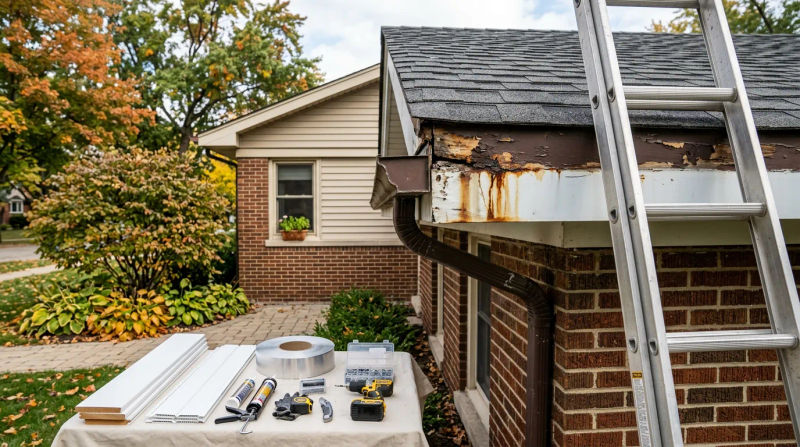
As a Senior Roofing Project Manager with over 15 years of experience in Chicago, I know that fall is the season when homeowners start looking up. The leaves are falling, and suddenly, you might notice peeling paint on the boards along your roofline, dark stains under the eaves, or even a sagging section of wood. These are classic signs of fascia and soffit damage, and cost is rightfully the first question on everyone's mind.
Your home's fascia (the board running along the roof's lower edge) and soffit (the material covering the underside of your roof's overhang) are more than just cosmetic trim. They are your home's first line of defense against weather and pests, and they play a critical role in attic ventilation. When they fail, you're left vulnerable to water damage, rot, and even structural issues. This guide is designed to provide transparent information about the costs involved, helping you budget for this essential repair before winter arrives.
Average Costs in Chicago
Providing a single, flat price for fascia and soffit repair is impossible because every home is unique. However, based on the hundreds of projects our crews have completed across Chicago, we can provide realistic cost ranges. The fascia soffit repair cost is typically calculated by the linear foot, factoring in labor and materials.
Here’s a general breakdown for homes in the Chicago area:
- Minor, Localized Repairs: For a small section of rot (less than 10 feet), perhaps caused by a clogged gutter corner, you can expect to invest between $600 and $1,500. This often involves removing a small section of gutter, replacing a few feet of fascia board and potentially some soffit panels, then sealing and painting to match.
- Moderate Repairs (One Side of a House): If an entire side of your home has sustained damage, the cost could range from $1,800 to $4,500. This is more common on sides of the house that face prevailing winds and weather. The price depends heavily on the length and the extent of any underlying wood rot.
- Full Fascia & Soffit Replacement: For a complete replacement on a typical Chicago-area home, the cost generally falls between $5,000 and $12,000+. The soffit repair cost for Chicago bungalows, for example, can be on the higher end of this spectrum due to their characteristic wide eaves and multiple roof lines, which increase the total linear footage.
To break it down further:
- Fascia Board Replacement: Expect costs of $25 to $50 per linear foot for materials and labor. Wood is often on the lower end, while composite or aluminum is higher.
- Soffit Panel Replacement: This typically runs from $30 to $60 per linear foot, as it can be more labor-intensive to install, especially if ventilation needs to be added or corrected.
Factors That Affect Price
The price ranges above are wide for a reason. Several key factors influence the final estimate our technicians will provide. Understanding these variables will help you see where your money is going.
- Extent of the Damage: This is the single biggest factor. A simple cosmetic fix is one thing, but often, a rotted fascia board is just a symptom of a deeper problem. If moisture has penetrated and rotted the rafter tails (the underlying structural wood), the repair becomes much more complex and costly. What initially seems like a straightforward rotted fascia board repair cost Chicago can double if structural elements need to be replaced.
- Material Choice:
- Wood (Pine, Cedar): The traditional choice, especially for historic homes. It's often the most affordable material upfront but requires regular painting and maintenance to prevent rot.
- Composite (Fiber Cement): An excellent, durable option that resists rot, pests, and fire. It holds paint well and has a much longer lifespan than wood, though the initial material cost is higher.
- Aluminum/Vinyl: Low-maintenance and rot-proof. Aluminum is great for wrapping existing wood fascia to protect it, while vinyl soffits are a popular and cost-effective choice for ventilation.
- Building Height and Accessibility: Working on a single-story ranch home is far simpler and safer than working on a 2.5-story American Foursquare with steep roof pitches, common in older Chicago neighborhoods like those in the Hammond area. Higher or more complex rooflines require more extensive ladder and safety rigging, which increases labor time.
- Architectural Style: Pre-1940s homes, like the Craftsman bungalows found throughout Chicago, often have wide overhangs, decorative rafter tails, and dormers. These architectural features add character but also increase the linear footage and complexity of the repair, impacting the final cost.
- Gutter System: The gutters are attached to the fascia. In almost all cases, they must be removed to perform the repair and then reinstalled. If your gutters are old, damaged, or improperly sized, this is the most cost-effective time to replace them.
How to Get the Best Value
Getting the best value isn't about finding the cheapest price; it's about investing in a durable, long-lasting solution. As a project manager, my goal is always to prevent homeowners from having to pay for the same repair twice.
- Act Now: The most important tip is repairing soffit and fascia before winter Chicago. A small, damp spot in October can become a large, rotted section by March after months of being buried under heavy, melting snow and ice dams. Addressing it now saves significant money.
- Choose Low-Maintenance Materials: While the upfront cost for composite or aluminum-wrapped fascia is higher than wood, it can save you thousands in painting and future repair costs over the life of your home.
- Insist on Correcting the Root Cause: A quality contractor won't just slap a new board over rotted wood. We always diagnose why the failure occurred - be it clogged gutters, poor flashing, or inadequate ventilation - and address that root cause as part of the repair.
- Ensure Proper Ventilation: Soffits are key to a healthy attic. When replacing them, make sure your contractor is installing properly vented panels that allow for adequate airflow. This prevents moisture and heat buildup that leads to ice dams and rot in the first place.
Questions to Ask Your Contractor
When you receive an estimate, you should feel empowered and informed. Here are the questions I recommend every homeowner ask to vet their contractor properly:
- What is the full scope of work? Will you be replacing the rotted wood or just covering it?
- Have you inspected the underlying rafter tails for damage?
- What material do you recommend for my home's style and our Chicago climate, and why?
- How will you ensure my attic has proper ventilation with the new soffits?
- Does your estimate include removing and reinstalling the gutters? What is their condition?
- What steps will your crew take to protect my siding, windows, and landscaping?
- Can you provide an itemized quote that breaks down materials and labor?
Asking these questions helps separate the professionals who perform thorough, lasting repairs from those who offer a cheap, temporary patch.
Conclusion
Protecting your home's roofline is a critical investment, not an expense. A sound fascia and soffit system shields your home from Chicago’s harshest weather, prevents costly structural damage, and maintains your home’s curb appeal. By understanding the factors that drive cost, you can make an informed decision that provides peace of mind for years to come. Over my career, I've seen firsthand how proactive, well-executed repairs save homeowners stress and money down the line.
For a personalized estimate and a thorough inspection of your Chicago home, contact James Android Test's roofer Co for a free consultation.